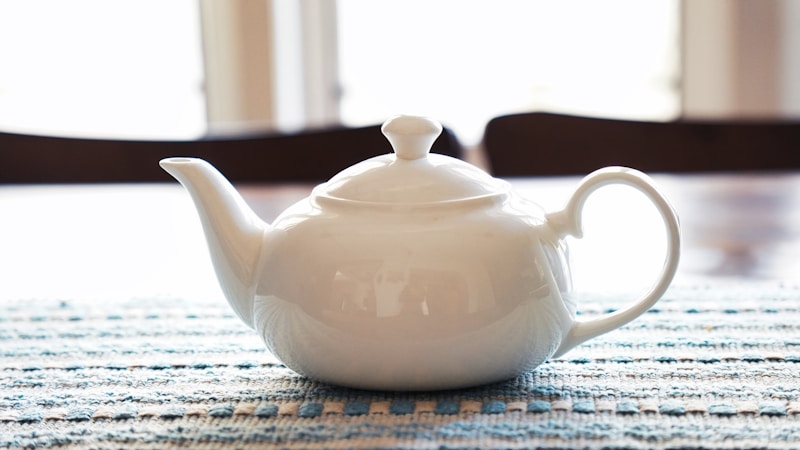
The Legend of Taimu Mountain: The Grandmother Who Saved a Village with White Tea
Of the six legends in this series, this is the oldest and the gentlest.
No emperors. No imperial exams. Just a plague, a mountain, and an old woman who was loved enough to be turned into a goddess.
This is the legend of Taimu Mountain, and the origin of white tea — the least processed tea in the world.
The Plague Below the Mountain
The story is set so long ago that the storytellers themselves hedge — “in the time of Yao and Shun,” they say, meaning roughly four thousand years ago, in China’s mythic prehistory.
On Taimu Mountain, a mist-wrapped granite massif on the coast of Fujian province, there lived an old widow. In most versions she has no grand title — she’s simply called Arao, grandmother, the kind of woman every village has: poor, kind, and always the first through the door when someone is sick.
One year, a plague sweeps through the fishing villages at the mountain’s foot. It strikes the children hardest — high fevers, spreading rash, the old texts would later call it measles or smallpox. Families begin losing their little ones. Nothing the villagers try slows it.
In her sleep one night, the grandmother gets a visitation — in the most-told version, from an immortal, who tells her that a cure grows on the mountain: near Hongxue Cave, high on the cliffs, she will find a tree with pale, white-downed buds.
She wakes before dawn and starts climbing.
The Buds in the Cave
Taimu Mountain is not a gentle walk — granite faces, sea fog, trails that dissolve into cloud. The grandmother, being a grandmother, climbs anyway.
At the cave, she finds them: low tea trees, their spring buds covered in a fine silver-white down, glowing faintly against the rock like snow that refused to melt.
She gathers the buds and carries them home. Having no fancy equipment and no time, she does the simplest thing possible — she dries them in the sun, then boils them in water, and carries the brew down to the villages, cup by cup, child by child.
The fevers break. The rash fades. The children recover.
The villagers, quite reasonably, decide the old woman is no ordinary woman. From then on she is Taimu — the Grandmother — and when she eventually dies, they rename her whole mountain after her. Taimu Mountain: Grandmother’s Mountain. It’s still called that today.
And the tea with the silver buds — the villagers plant it, guard it, and name its finest strain Lv Xueya, Green Snow Bud, the acknowledged ancestor of Fuding’s famous white teas.
What’s Story, What’s History
The story: the immortal, the cave, the plague cured overnight. Myth, and openly so — the legend exists in multiple versions, some involving the goddess Guanyin, some a Taoist immortal, and the earliest written versions are only a few centuries old even though the story claims to be four thousand years ancient.
The history: every factual anchor around the legend is real.
- Taimu Mountain really stands, in Fuding, northern Fujian.
- Fuding really is the historic heartland of white tea, and the Lv Xueya cultivar really exists — its buds really do carry that silver down, and it’s still grown there today.
- White tea really was the earliest style of tea people made — sun-drying leaves is the most primitive processing there is. In a real sense, white tea is the oldest tea, so a legend placing its origin in China’s mythic past is, culturally speaking, accurate.
- And the mountain’s name really is Grandmother’s Mountain. Someone, at some point, was honored that much.
A plague-stricken village, a healer, and a mountain renamed for her. You don’t need the supernatural parts for it to be true.
The Tea That’s Barely Made
Here’s what I find beautiful about this legend: white tea is the perfect tea for it, because white tea is the tea that’s barely made.
Other teas are shaped, rolled, roasted, oxidized, pan-fired — craft stacked on craft. White tea is picked, withered, and dried. That’s all. No rolling, no panning, no shaping. The bud you see floating in your cup is essentially the bud that grew on the bush, still wearing its silver down.
Baihao Yinzhen — White Hair Silver Needle, the top grade, made only from those downy buds — is about as close as tea gets to the grandmother’s cave recipe: buds, sun, water.
The flavor matches the legend, too: white tea is the quietest of teas. Soft hay and honey, melon and cucumber, barely-there floral — subtle to the point that some first-time drinkers wonder if it’s too weak. It isn’t. It’s whispering. Brew it gently and slowly, and give it a second cup before judging; this comparison is a good primer on what to expect if you come from herbal teas.
And one very real, very un-mythic thing white tea is famous for: it ages. The Fujian saying goes “one year tea, three years medicine, seven years treasure” — aged white tea deepens into dates and honey, and families literally store it like the grandmother’s remedy it was. If that idea appeals to you, my guide to storing tea covers how to do it right.
The Grandmother’s Cup
Every tea legend reflects the tea it belongs to.
Longjing’s is about an emperor, because Longjing was an imperial tea. Tieguanyin’s is about a goddess, because the tea smells like heaven. Da Hong Pao’s is about a scholar’s honor, because it was a scholar’s luxury.
The white tea legend is about a poor woman climbing a mountain to help sick children — because white tea was, first and always, folk medicine. Simple, gentle, and older than every fancy thing done to tea since.
Brew a cup of Silver Needle and look at the buds standing in the glass — silver, downy, upright — and it’s not hard to see how a whole mountain came to be named after a grandmother.
